
Writing Tips
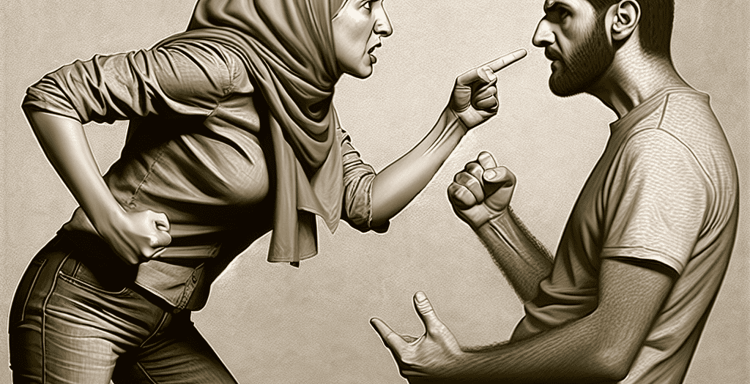
15 Logical Fallacies: Definitions and Examples
In the world of argumentation and critical thinking, understanding logical fallacies is essential. Logical fallacies are errors or flawed reasoning that can weaken arguments and lead to faulty conclusions. By familiarizing yourself with these fallacies, you will be better equipped to challenge flawed arguments and construct sound ones. This article will present 15 common logical…
READ MORE ›
E.g. vs. I.e.— What's The Difference?
When it comes to writing, certain abbreviations can help you convey your message clearly and concisely. Two such abbreviations, often misused and confused, are "e.g." and "i.e." Knowing the difference between these abbreviations and their appropriate usage is essential to ensure that your writing remains accurate. In the simplest terms, "e.g." is Latin for "exempli…
READ MORE ›
Everyday vs. Every Day: Differences Explained
In the world of grammar, small variations can make a big difference in meaning. One such example is the distinction between "everyday" and "every day." "Everyday" is an adjective that describes something commonplace, ordinary, or occurring on a daily basis. On the other hand, "every day" is a phrase that indicates something happens each day,…
READ MORE ›
Is It Bear With Me or Bare With Me? Differences Explained
In the world of common expressions, you may come across homophones that can lead to confusion in spelling and meaning. One such example is deciding whether to use "bear with me" or "bare with me" in your writing. Understanding the correct usage requires looking at the verbs bear and bare and their distinct meanings. By…
READ MORE ›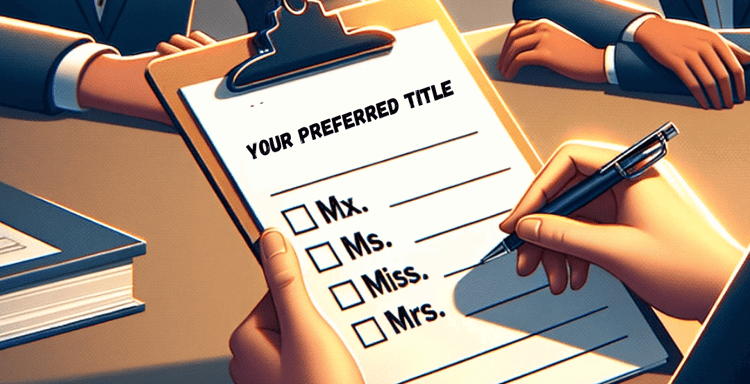
Miss, Mrs, Ms, and Mx - What's The Difference?
Understanding the distinctions between "Miss," "Mrs.," "Ms.," and "Mx." is crucial when addressing people accurately and respectfully. These courtesy titles have their roots in marital status and gender identity, which can sometimes lead to confusion. This article will help you navigate these courtesy titles effortlessly and confidently. In everyday conversations and written communication, using the…
READ MORE ›
Prepositions: What They Are & Examples
A prepositional phrase is an essential component of any sentence, providing additional information and context to help readers better understand the message. These phrases consist of a preposition, its object, and any words that modify the object. They often serve to modify verbs or nouns, functioning as adverbial or adjectival phrases. Delving into the world…
READ MORE ›
When to Use Who vs. Whom
When it comes to using "who" and "whom" correctly, many people find it challenging to determine the appropriate choice. These two pronouns may seem similar, but knowing when to use each will significantly improve your writing and communication skills. Understanding the difference between "who" and "whom" is about identifying the role of the pronoun within…
READ MORE ›
When to Use Whose vs. Who's
Navigating the English language can be tricky, especially when it comes to commonly confused words like "whose" and "who's." You may have stumbled upon situations where it's difficult to determine which word to use. To help you overcome this dilemma, let's explore the key differences between these two terms. "Whose" is a possessive pronoun, used…
READ MORE ›
How To Write a Diary
A Great Artform The diary is among the most well known forms of book-writing. Many young people will start their writing lives young by keeping a diary or a journal. A diary might be the kind of writing that is done more typically day by day in a format prescribed by the size of the…
READ MORE ›
How To Improve Your Writing
Learning to become a better writer might seem daunting. Still, you can quickly improve your skills by breaking them down into manageable steps. Every writer will have strengths and weaknesses, and by focusing on your weakest areas first, you'll learn to write better over time. Organizing your topics and creating a narrative structure that supports…
READ MORE ›
How To Write A Novel
Novelists have historically been framed as these glamorous, mysterious beings that survive on cigarettes, alcohol, and vibes. They are gifted beings with a dramatic flair that get invited to all the best intellectual parties. Then, while the rest of the world sleeps, the writer communes with their muse and creates art. Alas, the truth is…
READ MORE ›
How To Write A Thesis
If you feel nervous or anxious about writing your thesis, you are not alone. The good news is that you have already tackled this daunting task by researching ways to write a thesis. You can clear the hurdles and reach the finishing line with a concrete goal, a structured process, and discipline. The following framework…
READ MORE ›
Do Short Stories Have Chapters?
Short stories have become extremely popular over time, and it’s not difficult to see why. Short stories are greater for readers because they don’t need to go through hundreds of pages to get the thrill of a story. Saying this, short story writers need to develop their stories in the same way as novel writers…
READ MORE ›
How Can You Get Rid Of Cluttered Writing?
Clutter doesn’t just happen in our closet or on our desk. When you are writing, you may not even be aware that you are cluttering your article or story with unnecessary words or details. Some details are essential to the development of your story or characters, while others just confuse and bore the reader. As…
READ MORE ›
How Long Does It Take To Write 500 Words?
Whether you are planning an essay, noting down your thoughts in a journal, or penning the next bestselling novel, you may wonder how long it will take to write 500 words. In truth, the time will vary on many factors, like your writing experience or the amount of research required. Despite this, it’s a good…
READ MORE ›
How Long Does It Take To Write A Letter Of Recommendation?
Recommendation letters may be a significant element of your application materials. When obtaining and sending letters of reference, there are various best practices you can follow to ensure those you include add value to your application. You should ideally request a letter of reference at least four weeks before the deadline, with two weeks being…
READ MORE ›
How Long Should A Prologue Be?
A prologue is a brief portion of writing that comes before the main plot. The prologue is frequently used to enrich the reader's grasp of the tale, but it may also be used to offer history that is necessary for comprehending the storyline. A prologue might be as little as a page or two or…
READ MORE ›![How Many Characters In A Book? [A Character Count Guide]](https://media.word-counter.com/cdn-cgi/image/format=auto,quality=80,width=750,height=384,fit=cover,gravity=auto/images/2022/09/How-Many-Characters-In-A-Book-A-Character-Count-Guide.jpg)
How Many Characters In A Book? [A Character Count Guide]
There are many concepts to juggle when writing a novel, such as crafting a plot and wrapping it up nicely (or ambiguously, if that’s what you’re going for), and developing characters. But there are also technical aspects to consider too, namely how many words/characters are going to be in your finished manuscript to be within…
READ MORE ›
How Long Should A Poem Be?
Poems are a great way of expressing your emotions. Whether you wish to write an uplifting poem or one with a more serious theme, this writing style is a great creative output. This makes it sound as though it's easy to write poetry. But the truth is that it can be difficult to write. You…
READ MORE ›
How Many Pages Are In A Comic Book?
When writing a comic, you shouldn’t think of it by the number of words on each page. They are a mixture of art and words. The artist and writer must work together to fit everything on each page. How many pages are in a comic? The answer depends on the type of comic that you’re…
READ MORE ›
How Many Scenes In A Novel?
So much time and effort goes into writing a novel that it can be confusing knowing where to start. One of the most important aspects to every novel is of course scenes. But if you’ve never written a book before, it can be hard to quantify just how many scenes you will need in order…
READ MORE ›
How To Write A Prologue
Avid book readers will be able to identify a prologue from the second they start reading one. It is not, technically, the first chapter, but it does lay the foundation of the story that you are about to read. Sometimes it provides context or background that you require before starting the narrative, while other times,…
READ MORE ›
What Can Help Slow Down The Pacing Of A Story?
When you’re writing a story, you might feel that the pace is getting too fast, and you’re losing control. It’s a problem that many writers face and one you’ll have to notice when you’re reading through a first draft. But how can you slow down the pacing of a story so that it’s not too…
READ MORE ›
What Is A Paragraph Break?
Writing something in the English language can be a bit of a grammatical nightmare. It often takes us years to learn how to write properly, all the rules within sentences and the punctuation marks are something that many native speakers take for granted in their adult years. But sometimes we do forget about what can…
READ MORE ›
What Is The Difference Between Revising And Editing?
Whether you are writing your first book or you are working on an article for the local newspaper, you will come across a number of different terms that are used all the time in publishing. Some of these terms may seem obvious but they involve a lot more than you might think. Two of these…
READ MORE ›
When To Start A New Paragraph
Paragraphs are absolutely essential when it comes to writing. They help to break up and format any body of writing or text and they overall make the writing a lot easier to read. If you’re writing something for yourself, you might be wondering how it is you start a new paragraph, and more importantly when…
READ MORE ›