Gray or grey? This question has puzzled many when it comes to spelling the color that lies between black and white. The distinction between the two spellings stems from the differences between American and British English. In American English, the color is spelled "gray" with an "a." On the other hand, British English uses "grey"…
Understanding and using the correct point of view in your writing is essential for effectively engaging your audience. First, second, and third person are three ways to describe the perspectives used in a piece of writing. Each has its own unique characteristics that can greatly influence the tone and reader's experience of your work. In…
In today's fast-paced digital world, email remains one of the primary means of communication for professionals and casual correspondence alike. But how you end an email can leave a lasting impression on the recipient, and choosing the right sign-off is as important as the content of your message. This article explores nine best and worst…
Writing a haiku can be a fun and rewarding exercise in poetic expression. As a traditional form of Japanese poetry, haikus are short, unrhymed poems that consist of three lines and follow a specific 5-7-5 syllable pattern. Although originating in Japan, haikus are now enjoyed and composed by people all around the globe in various…
In the world of common expressions, you may come across homophones that can lead to confusion in spelling and meaning. One such example is deciding whether to use "bear with me" or "bare with me" in your writing. Understanding the correct usage requires looking at the verbs bear and bare and their distinct meanings. By…
In the world of grammar, the distinction between "laying" and "lying" (or "lay" and "lie") can often lead to confusion. These similar-sounding words are not interchangeable, and understanding their differences is essential for clear and effective communication. Although both terms seem very similar, understanding the grammatical context in which they're used is key to employing…
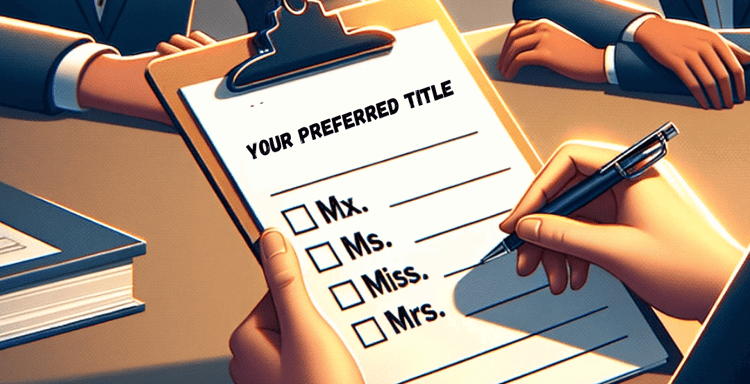
Understanding the distinctions between "Miss," "Mrs.," "Ms.," and "Mx." is crucial when addressing people accurately and respectfully. These courtesy titles have their roots in marital status and gender identity, which can sometimes lead to confusion. This article will help you navigate these courtesy titles effortlessly and confidently. In everyday conversations and written communication, using the…
Are you planning a photography session to capture the essence of a special moment, person, or event? A commonly debated topic in the world of photography is whether to use the term "photo shoot" or "photoshoot." Understanding which term is correct can help you confidently discuss your upcoming project with others. Both "photo shoot" and…
A prepositional phrase is an essential component of any sentence, providing additional information and context to help readers better understand the message. These phrases consist of a preposition, its object, and any words that modify the object. They often serve to modify verbs or nouns, functioning as adverbial or adjectival phrases. Delving into the world…
Metaphors are an essential aspect of language, allowing you to express complex ideas by drawing comparisons between seemingly unrelated things. As a figure of speech, a metaphor implicitly equates two dissimilar entities without using the words "like" or "as." This powerful literary tool can help you create vivid imagery, exaggerate a characteristic, or convey a…
Adjectives are an essential element in the world of grammar, providing richness and diversity to how you express yourself. You may encounter adjectives daily without even realizing it. These words describe the qualities, states of being, or quantity of nouns and pronouns, such as silly, yellow, fun, or fast. They can help you convey more…
Adverbs are an essential component of language, giving us the ability to modify and describe various aspects of speech. In its simplest form, an adverb is a word that modifies a verb, an adjective, another adverb, or even a whole sentence. They provide context and offer more precise details, helping you paint a clearer picture…
DISCLAIMER
The word count and text analysis tools provided on word-counter.com are intended for
general informational purposes only. While we strive to provide accurate and reliable software, we make
no representations or warranties of any kind, express or implied, regarding the accuracy, adequacy,
validity, reliability, or completeness of any calculation or data produced by this tool. Users are
encouraged to verify critical counts against specific requirements (such as academic or publishing
guidelines) independently. Use of this site is strictly at your own risk.